August 27 — Day 185b — continued

Air war
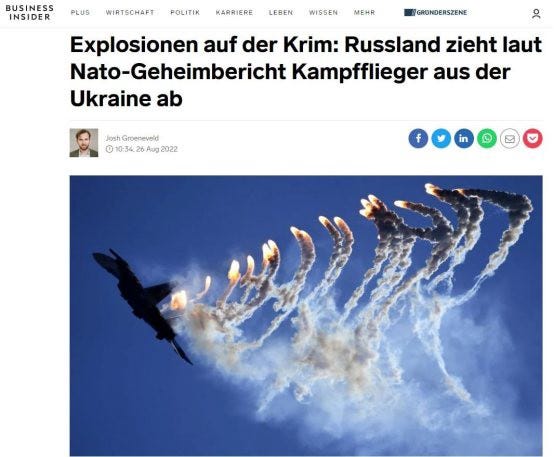
Apropos of long-range strikes, multiple sources report the RF is pulling at least some of its aircraft out of Crimea, following what appear to have been badly damaging UAF strikes — we still don’t know exactly by what — on airfields near Simferopol and Saki earlier this month. The first planes to go were 6 x Su-35 fighter jets and 4 x MiG-31 interceptors. Both of these are high performance air superiority aircraft that outclass anything the Ukrainian air force has flying. But, for the record, if NATO ever were to consider a no-fly zone in Ukraine (over, say, a nuclear power station that might otherwise get blown up by artillery), then the departure of these RF fighters made that possible NATO mission easier. News item image attached.
Partisans
For this section, first, a video of a car bombing in the Donbas town Starobilsk from August 11. This is deep in territory controlled by the RF since 2015.
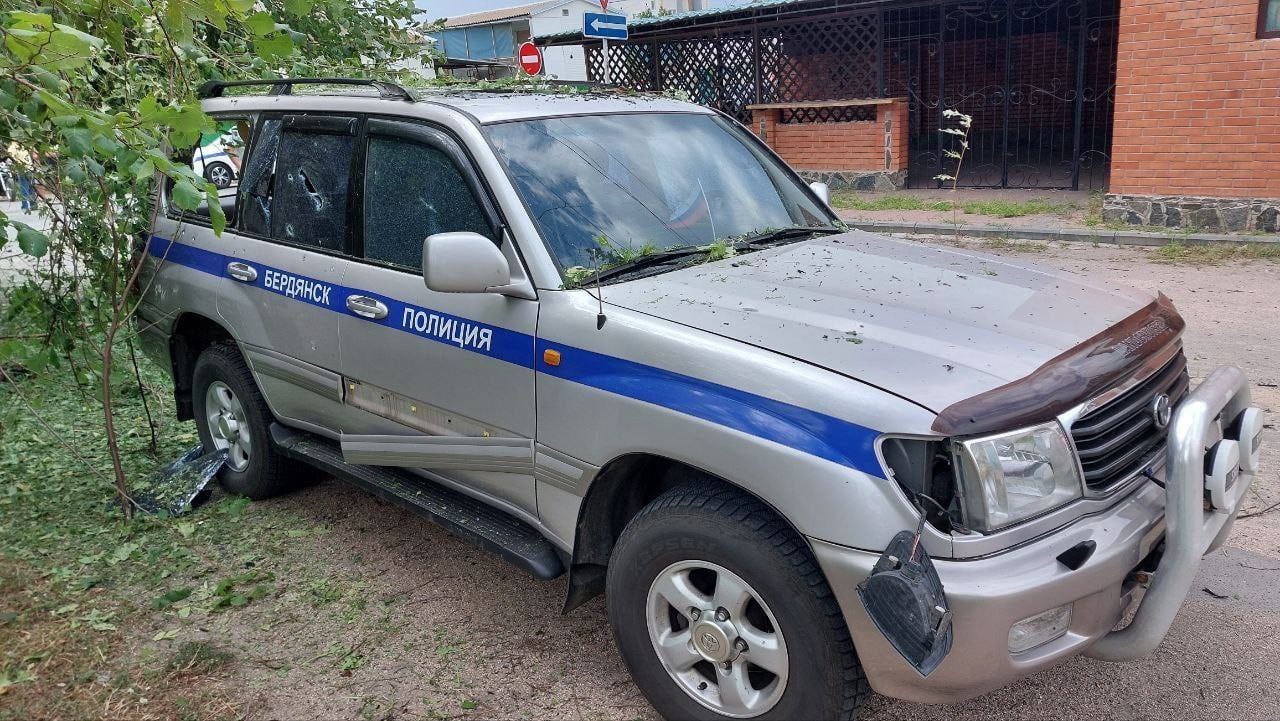
Second, images from Melitopol, a car carrying an official involved in the upcoming RF-organized “referendum” was also hit by a bomb.
He was identified as one Aleksandr Kolesnikov. He survived the explosion but died on the way to hospital. Image attached, I don’t know who the woman is.
Ukrainian media credited both attacks to partisans.

Yet more Kremlin shuffling?
Finally (!) I read a report originating ultimately with Moscow opposition, that claimed that RF Defense Minister Sergei Shoigu is now locked out of the military decision-making process, and Putin, angry with the performance of the military, has taken the reins and is issuing orders directly to joint command east and joint command south. This is not confirmed.
But, if Putin running the Russian campaign in Ukraine is now happening, then all I can say is read Russian history. In 1915, autocrat Tsar Nicholas II took personal command of the Russian army, basically with the hope that his direct link to the troops would improve combat performance, and to make his generals fight harder. Two years later the country was in revolt and the army surrendered to the Germans, and three years later the Tsar and his family were executed.
I will spare you the Adolf Hitler discourse because apparently these days if one brings historical reference to Nazi Germany into a historical conversation one is insufficiently liberal and overly great power-centric. I will just ask the question: What Central European dictator fired his top general and took over direct control of the Wehrmacht in late 1941, and did that managerial move end well?
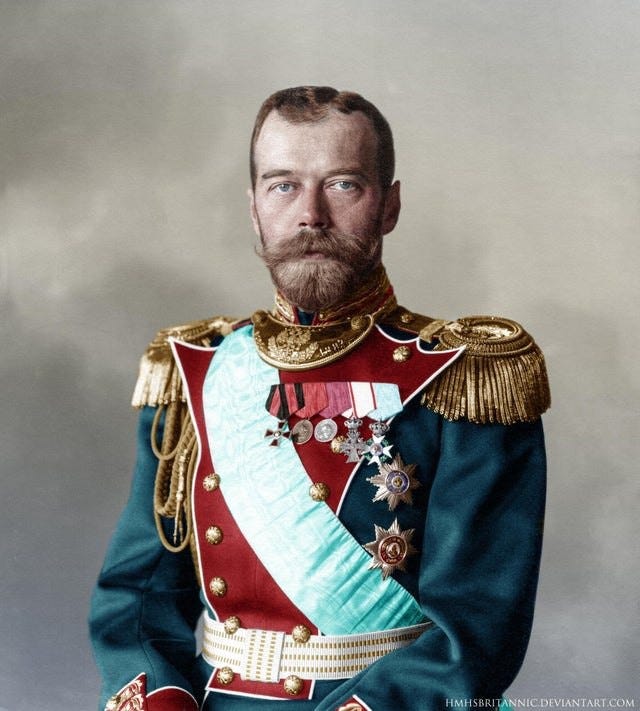
This is a very reasonable pretext for a photograph Tsar Nicholas resplendent, if not particularly brimming over with charisma and natural leadership, in one of his most splendid uniforms.